Logo

Logo

Monday, September 28, 2015

Do you have the genes to be an Olympian?


Ever thought what it would be like to train or perform  like an Olympic athlete?  Having read The Sports Gene:  http://thesportsgene.com/ by David Epstein and listened to recent podcasts by Mark Sission of Mark’s Daily Apple with the entrepreneurs at DNA Fit: http://www.dnafit.com/us/ , a new research group providing genetic testing/analysis for athletes hoping to optimize their training. From energy/nutrient utilization and susceptibility to connective tissue injuries to one’s predilection for strength based training versus long-duration endurance exercise, DNA Fit hopes to give athletes a wide variety of data so that they can get the most out of their pursuits. While I am very open-minded when it comes to epigenetic research and studying the interplay between our genes and the environment, we must always take pause when new genomic research hits the scene- touting to have found numerous genes showing strong associations with specific physiologic and metabolic functions related to athletic performance.

Of course, being an active person myself, it would be quite fun and interesting to do a DNA Fit test just to see and maybe rationalize in my mind what I already believe to be true with regards to my overall athletic performance, optimal nutrition requirements and potential tendencies to injury. The reality is, however, I have no money for such testing and waiting a few years for the research to evolve and my pockets to fill with at least a little cash may be the better option.

While people like David Epstein and the geneticists at DNA Fit have been studying the role of specific genes in creating the champion Olympian, I had perhaps a more relevant question for the population as a whole that arose from a happenstance encounter with a patient during my recent ambulatory internal medicine rotation. The patient was a 46 year old male, who was by BMI standards, morbidly obese and without significant weight loss in recent months. His diet was improving but still consisted of primarily highly processed and refined foods including a fair share of Hardee’s. In addition, he worked a relatively sedentary job, did not exercise and seemed to be sleeping only 5-6 hours a night at best. Sound like recipe for poor health to you? Other than being obese, however, his metabolic parameters were remarkably within normal limits. From fasting and post prandial glucose to lipids and inflammatory marker such as CRP, he seemed to be free from disease. With no evidence of coronary artery disease, diabetes, dyslipidemia or even hypertension, this guy was managing to defy the odds of his poor lifestyle choices. While there appeared to be almost nothing about his environment conducive to optimal genetic expression, he was still functioning at a relatively high level. How was this man eating donuts and drinking Big Gulps without any evidence of metabolic derangements and better glucose control than his health care providers? Could the blessing of amazing genetics be the answer?

So my questions for the smarter people of the world is this: When it comes to identifying the genes that seem to be associated with optimal health, should we be studying the gold medal Olympians or should we switch our attention to a different population? Was my patient the individual that the geneticists at 23 and Me and DNA Fit should actually be studying? Are individuals like my patient, who appear on the outside to be the antithesis of health, the ones who have the genetic secrets to avoid chronic disease even in the face of a very poor lifestyle? I do not have many answers to these questions, only more speculation into the complicated nature of gene-environment interaction. One thing is for certain, however, there are likely hundreds or thousands of individuals working and living who will never compete for a place on the podium, yet the metabolic and genetic heroics at play within their cells and tissues is probably worth a gold medal.

What We Need Most?


So it has been a while since my last post and despite having relatively more free time over the last month, I haven’t been able to get around to posting a new piece- until now! But, before I delve into the main subject of the post, I wanted to share two simple rules that inspire me to keep writing and blogging and maybe will inspire you to do the same. 1) Keep your posts short and to the point and 2) only write about things worth writing about. Take note, the prerequisites for successful writing are not 1) talented and elegant word choice or 2) an Ivy league education. Anyone with the right motivation can write about topics that bring meaning to a wider audience. While some people choose to write for personal exploration and shy away from public exposure, I feel there is something beautiful about sharing with others, especially when the intention is simple: to bring knowledge, happiness and joy with your words.

With this wonderful construct in mind, I have been thinking more and more lately about a wonderful question posed by my uncle during a recent week long family vacation. During this vacation, I was surrounded by my aunts, uncles, cousins, grandparents and parents in the most complete family reunion in recent memory. Seeing some of my cousins embarking on the adventure that is college, and talking to my grandparents about their world travels brought me back to the reality that there was, indeed, a life outside of the hospital. More importantly, however, I was able to reconnect with my closest of kin, the ones who I called family, the ones who I loved the most. In this age of fabricated relationships and social media, we often substitute real human connection to live in the seemingly satisfying world of “likes,” Instagram photos and an insatiable Facebook news feed. If we could only see that technology is not the solution to all ills, would we finally find happiness from the simple hug? If we could step back from the “irrationalizations” that the pleasures gained through social media actually fulfill our true desires/needs as loving human beings, we would see that all we actually want is to connect with other humans?


Living once more in this world of nourishing interaction, it was no surprise that my uncle would provide the greatest food for thought during our last evening meal.  With the most earnest yet humorous tone, my uncle asked, “Being the most medically educated among us, if there was one thing you would recommend to keep healthy/improve one’s health, what would it be?” It took less than 2 seconds for me to respond. Instinctually and without fail, I replied, “Do this at least once a year.” It took slightly more than 2 seconds for the reality of my answer  to sink in, but the sentiment was immediately crystal clear. Being surrounded by your “tribe,” enjoying good food in a stress-free environment, sleeping more than 6 hours night and engaging in multiple forms of movement was exactly what all of us needed to restore and renew our strong passions for work. I will be the first to tell you that my family is full of enthusiastic “smartypants” and just having a few days together, sharing our collective knowledge brings about a mini-enlightenment without the feeling of a medical school lecture. And while it would be amazing if we could always live and work in this supportive and nourishing environment, it is vacations/times like these that remind us all that even as modern humans relying on technology for the simplest of tasks, maybe there is something to be gained from choosing to keep it simple all in the company of the ones you love.

Saturday, August 22, 2015

Saturday Photography and Poetry: August 22nd, 2015

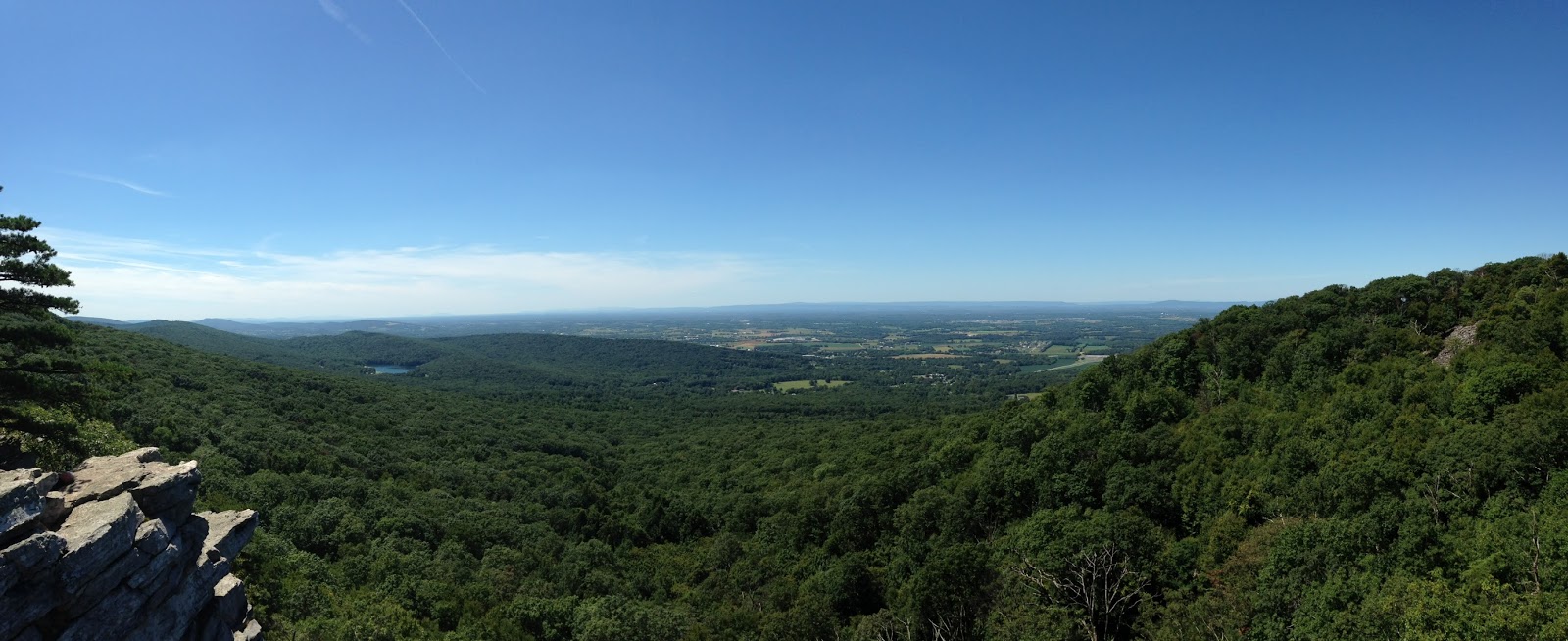
It is taken a little longer than I would have liked to start this series, by without regrets and further adieu, here is a little something from my recent trip to Maryland to hike a portion of the Appalachian Trail with one of the best friends anyone could ask for: Max "Bear Bag" Mishkin. If only we all could  see the nature through eyes like his! Enjoy


Mountaintop

Climbing
Switchbacks never-ending
Within the green tunnel
Searching for the horizon
We told ourselves we did this for fun
In ninety-five degree heat
And packs strapped to our backs
We began to rethink
Where is the mountaintop?
Calling out the leaves rustled a reply
Just keep climbing, you are almost there
Trudge mode we called it
When all hope seemed lost
A flash of blue peaked through
The sky was beckoning
As we inched ever closer
Invigorated
Our new-found energy
Appearing to come from deep within
But instead, surging forth from the pair of legs
Churning right alongside
Companions
Having reached another mountaintop
There was no such thing as failure
Just another opportunity

To redefine resilience

What is it about sleep that is so special?

            Six months into my 3rd year rotations and I continue to be amazed everyday with the unique ability of most humans to work through and ignore obvious physiologic signals trying to say that enough is enough, you need some rest! The current culture within Western medicine is centered around strength and fortitude, and more often than not, I hear individuals feeling the need to “brag” about the number of hours that they have been continuously awake, functioning, and “performing” the necessary medical tasks required.  Despite the work hour restrictions placed on resident physicians, the truth is they work long hours on irregular cycles, and inevitably, share amongst other residents/interns, a periodized schedule of night shifts.  Throw in the fact that the hospital is by no means a stress-free environment and one can quickly see that modern health care, as is carried out in most academic medical centers, is made for anything but health. Perpetuating the perception that working more means you are a better physician or that acknowledging fatigue and distress simply means your are too weak for this job is only doing the health care industry more harm. Stepping down from the soap box, I hope this evolving insight will provide a little context for the main topic of this post: SLEEP!


            The realization that sleep is an absolutely essential component of health is nothing new. I love hearing the hard charger’s mantra “I’ll sleep when I’m dead,” because the reality is, acute sleep deprivation WILL KILL YOU before dehydration or malnutrition stop your organs in their tracks. To put it in another way, you can survive longer without food and water (considering you are not completely exposed in Death Valley during the summer months) than you can without sleep.  For years, epidemiologists have been tracking, though numerous retrospective and cohort studies, the strong associations between sleep deprivation and shift work to nearly every pathologic disease process including: metabolic disturbance, cardiovascular disease and even cancer. So we know we need sleep to be healthy, but why suddenly does it seem like every holistic, functional and traditionally trained family doctor is urging his or her patients to make sleep a number one priority? Just as with most pathologic “disease” treatment within the current system, there isn’t a problem worth treating until it is incredibly DISABLING or LARGE ENOUGH to warrant the serious interventions we have studied and KNOW to be effective. As far as sleep is concerned, Americans have gradually been sleeping less over the past 50 years, such that, as a whole, we are now sleeping between 1.5-2 hours LESS every day. When you consider that the average individual needs from 7-9 hours per night, 2 hours of lost sleep from the average of 8 hours is a 25% reduction. That might not seem like a lot, but the scary reality is that due to the nature of our sleep cycles, cutting hours of sleep isn’t as simple as first grade subtraction.  One may disproportionately lose a greater fraction of restorative, deep, slow wave sleep in addition to compromising REM sleep, and establish irregular intervals of early stage 1 and 2 sleep. While this post is not meant to focus on the scientific and technical aspects of sleep, I do want to make it clear that when it comes to sleep 8-2 ≠6.

            So yes, since chronic disease is disabling millions of Americans and we are now aware that most Americans are sleeping significantly less than they should, sleep has become a problem worth treating. And of course, what do we turn to when it comes to treating insomnia or poor sleep: PILLS. Doctor Kirk Parksley has become one of the most prominent researchers, clinicians and advocates for recognizing insomnia and poor sleep as one of if not THE most important public health concern facing our nation- even more than the DIABESTIY EPIDEMIC that seems to get more media attention than the NFL in April. Poor jokes aside, the treatment of choice for insomnia and disturbed sleep is a class of drugs affectionately called the “Z drugs.” Structurally similar to the anti-anxiety/sedative drugs known as benzodiazepines, the “Z-compounds” which include: Ambien, Sonata and Lunesta are more selective for certain receptors such that they induce more sustained “sedation/hypnosis” than the traditional anxiolytic medications. Parsley comments; however, that the “sleep” induced by these “Z compounds” is entirely anything but actual sleep. The brain wave patterns (EEG) and overall polysomnography observed for people using these drugs resembles that of an unconscious zombie knocked out with a sledgehammer. The normal sleep architecture and pattern is non-existent and the idea of actually getting restorative slow wave sleep is entirely fictitious. To make matters worse, due to their chemical and structural “differences” from the benzodiazepine drugs, the “Z compounds” are considered to have no potential for dependence, abuse or addiction. If you ask Dr. Parsley or other clinicians specializing within the field of sleep medicine, they would laugh you off of the face of the Earth if you believed the chemists and pharmaceutical companies explanation of the drug's mechanism of action, risks and benefits. Working within the field of military medicine, and more specifically with  the Navy Seals, Dr. Parsley has commented in numerous blog posts, videos and podcasts the struggle to get soldiers off of their absurdly high routine dosages of ibuprofen, acetaminophen and Ambien. I have provided links to some of his best articles, his current sleep promoting supplement and a TedTalk regarding this growing problem below.

1.  Sleep Cocktails: http://www.sleepcocktails.com/

So now that we know that these medications are clearly not the answer, what exactly should the average American focus on to improve their sleep? Rather than try to re-invent the wheel, I will provide you with links to some of the best resources, education, advice and programs for improving sleep. Obviously, there are hundreds of ways to go about improving sleep hygiene from modifying your daily habits to taking supplements, and I have tried to provide a selection of resources from some of the best practitioners and researchers currently available across this spectrum. In my next post I will share my own experience and experiment with sleep during a few weeks of night shift work during my pediatric and obstetric rotations. Enjoy the reading and watching, but more importantly get some better sleep!

Reference and Resources

1.  Sleep Habits for Shift Workers
“Surviving the Night Shift” Nom Nom Paleo:  http://nomnompaleo.com/post/55156756199/surviving-the-night-shift

2.  Sustainable Behavior and Habit Change
“Dan’s Plan” Dan Pardi

3.  Alternative Medication for Insomnia
“Sleep Cocktails” Dr. Kirk Parsley and Robb Wolf

4. Understanding Sleep
“How Much Sleep Do You Need?” Guest Post by Dan Pardi- Chris Kresser’s Revolutionary Health

5. Sleep Hygiene
“Sleep” Guest Post by Evan Bran- Paleo Mom

Saturday, July 18, 2015

A Poet Reborn

Sometime in seventh grade (~2003/2004), I remember writing somewhere around 40 poems in 2 weeks for 2 english/reading/literature classes. From English sonnets, to free verse, haiku's, it was simply too much for a middle school mind to handle. Fast forward over 10 years and it seems the seeds of the poet planted by my amazing grandfather have finally be watered and are starting to grow. There has been nothing better than writing a thoughtful poem after a long day at the hospital, or better yet, on the walk into work in the crisp summer morning. I have provided a few of my more mindfully oriented pieces below and will continue to add at least one poem each week. Maybe a weekly Saturday poem is just the thing to share with the welcoming world.


Photograph
 6-3-2015

What is a photograph but a poem without words
Cursed without a voice, but blessed by the majesty of sight
The colors dancing upon my eyes, speaking a different language
Shadows, contours, reflections whisper in my ears
It takes more than silence to keep a picture from speaking

 a thousand words


Compassion
6-25-2015

Gratitude
We share our thanks
Positivity
We share our optimism
Caring
We share our thoughtfulness
Truth
We share our honesty
Acceptance
We share our understanding
The recipe for compassion is rather simple
All it takes is a little belief
Into how beautiful
The human connection

Can truly be


The Flame
7-16-2015

We all carry a single torch
At the center of our being
It is our eternal flame
Forever burning
Even after our physical form
Has passed
Nurture your fire with friendship
Let the light show you
What it truly means
To be nourished
Give from your source
And receive the gifts from all those
Willing to connect
Eternal being is not the same as
Always giving
Or
Perpetually receiving
We must seek to be
The wick when another is burning out
The light when a torch goes dim
The strength when only smoke remains
Blessed we are
To have courage
To let our fires burn
Under the care of another
Let vulnerability and compassion
Be the sustenance
To your flame
And you will never be worried again
By the question
Of when your embers

Will finally go out